Notes

Time Trippin' Tales

What If? Musings
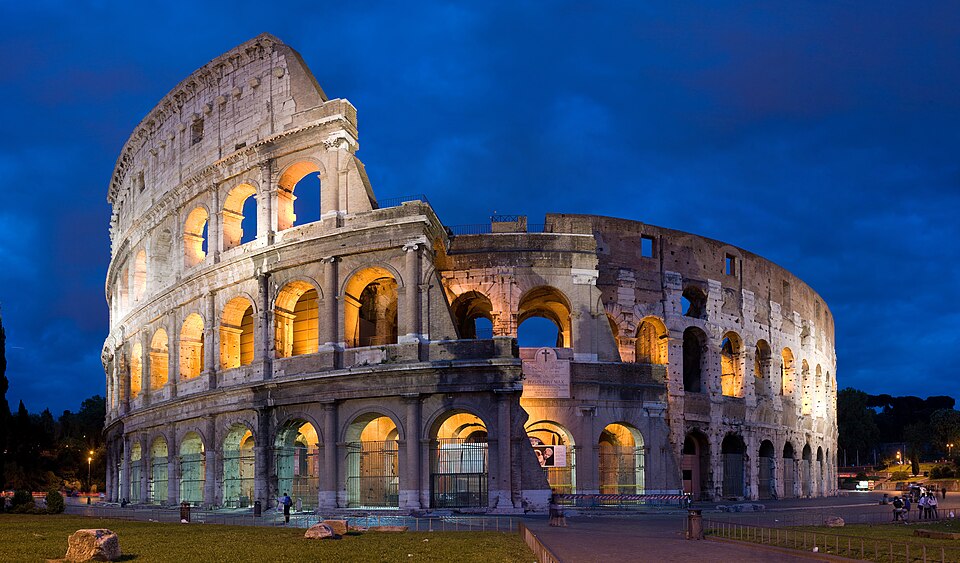
panorama of the Coliseum at dusk

Time Travel – For Real?

By Deborah O’Neill Cordes and Cary Morgan, writing as Morgan O’Neill

Has anyone actually traveled through time? We – co-authors Cary Morgan and Deborah O’Neill Cordes – use it as a plot device. It’s a fascinating way to send our modern day heroines and heroes back to pivotal moments in history.

But has time travel ever occurred... for real?

While doing research for our novels, we’ve uncovered some speculative stories about this. From ghost-like encounters at ancient sites, including spirits who actually converse with tourists, to streets that may harbor portals to the past, there seems no end to these mysterious reports. Do locales actually exist where time slips away? One of our characters in The Thornless Rose believed such places were real and described them quite colorfully, “The veil between two worlds... aye, ‘tis true. All o’ Europe is filled with places where the veil is thin, and the past and present come together. The Druids spoke o’ this in the olden days.”

Aye, dearest Trudy MacCunn Leach, that’s a fair point, ken…

Do you still need convincing? There are accounts of people hearing echoes of the past in Rome’s Colosseum: the clanging of swords, the roaring of lions, the screams of the dying. In deepest night, while the Eternal City sleeps, the mundane duties of the security guards are sometimes disrupted by these eerie sounds. If the guards’ goosebumps are any indication, then ancient spirits – both human and beast – have reached out and parted the veil.  

And what about Bold Street in Liverpool? For many years, time slips have been reported there. It happens to locals and tourists alike; they turn a corner or enter a building, and momentarily find themselves in what seems to be 1940s Liverpool or even Victorian England. People report that modern stores disappear, and old-fashioned shops, like Caplan’s, appear out of nowhere, as if by magic. This has happened so often that there’s been a paranormal study examining the phenomena. One notable incident occurred when an off-duty policeman named Frank, reported an incident involving a visit to Liverpool’s Dillon’s Book Shop in the 1990s. He and his wife were touring about on Bold Street. When they found the bookstore, Frank left his wife there. He walked around for a time, window browsing. Within a few minutes, he began to see people dressed in old-fashioned post-WW II styles, as well as mid-century vehicles on the street. Alarmed by the sensation of slipping through time, he hurried back to find his wife. To his shock, the bookstore wasn’t where he’d left her; instead, a department store called Cripp’s was located in that very spot. As he rushed inside, the interior suddenly changed from a department store with ladies’ hats and clothing, back to that of a bookstore. Only later on, when he discussed the incident in public, did he discover that Cripp’s had actually existed on Bold Street in the 1940s. Dillon’s had moved into that location decades later. How extraordinary – and scary!

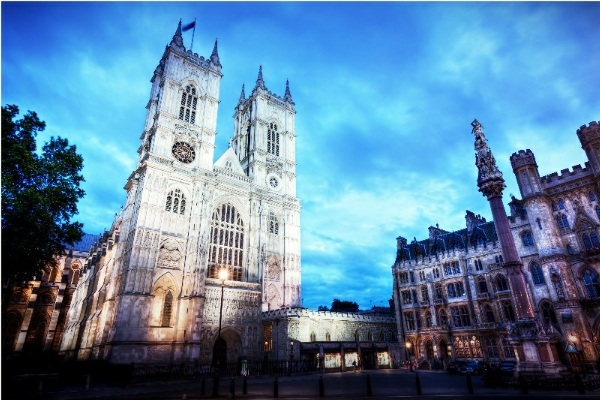
But Bold Street is only one location where the veil appears to be thin. The British Isles are filled with them. One of our favorites is London’s ancient Westminster Abbey. When you walk among its honored dead and their memorials, you can feel the pull of the past. Sometimes, a monk can be seen in the early evening roaming about the church. He often chats with visitors; however, on one occasion he berated a group of tourists for their scanty modern attire. After these interactions, he slowly backs into a wall and disappears. Interestingly, monks have not dwelled or prayed in the Abbey since Queen Elizabeth I forced them out in 1560. Some say the monk is a ghost, but his solid appearance and intelligent conversations suggest he may be an actual time traveler. If that’s true, then he must be as perplexed by his strange experiences as modern folks are by his presence!

And finally, we travel back to northern Italy, to the castle of Rossena, one of the settings in our medieval Italian series. The ghost of the beautiful Evereline is said to haunt the site. Historical accounts tell us she died lonely and heartbroken, having been forced to marry someone other than her true love. Here, we concede she may indeed be a ghost – and not a time traveler – since she doesn’t interact with anyone in the modern world. Near Rossena stands the ruins of Canossa, the castle belonging to our Italian hero, Lord Alberto Uzzo. We wouldn’t be surprised if Alberto’s spirit lingers on the ramparts of his fortress. Could he be searching for Gwendolyn, our twenty-first century heroine? Will they ever find each other in our Italian time traveling adventure? Will love conquer all?

And so, dear reader, do you believe the past sometimes slips into the present? That the veil becomes translucent? If you do, perhaps you know the disorientation of asking: Where am I – and more importantly, when?

Image courtesy of Wikipedia Commons: The Colosseum in Eternal Rome. Photo: DAVID ILIFF Lic. CC-BY-SA 3.0

Copyright © 2026 by Deborah O’Neill Cordes and Cary Morgan, writing as Morgan O’Neill. All Rights Reserved.
Morgan O’Neill
writing Life Insight
feather quill pen

Are Two Heads Better Than One?

Co-Authors Deb and Cary discuss how they’ve written three time travel series as a team.

Deborah O’Neill Cordes – Happenstance played a role in the formation of our team, because we met by chance at a writers’ conference. It was a lucky day for us! Good fortune was also with us regarding our pen name, since the combination of our maiden names made a great pseudonym. But luck won’t write a novel, let alone eight of them. An old expression fits what we do: two heads are better than one. It works well for us, especially because of the complexity inherent in writing epic time travel fiction.

Cary Morgan – I agree. Our stories are complex, with many layers and interwoven plots blended together to make a cohesive whole. One of the threads is to give our time traveling heroine a realistic and challenging experience when she arrives in the past, in that she doesn’t necessarily know the language or customs. This literally opened the world to us, and our characters have ventured to ancient Rome, medieval Italy, and then on to Elizabethan England.

Deborah – Obviously, the Elizabethans spoke English, but our twenty-first century heroine, Anne, still has to learn her “thees” and “thous,” and that’s only the beginning. The archaic English words are interesting, to say the least. What the heck’s a fustilug or a tussy-mussy anyway? As Anne struggles to blend in, our hero, Dr. Jonathan Brandon, who time-traveled from 1945, is there to lend a hand – and perhaps his heart as well.

Cary – Ah, Jonathan! Was there ever a more heroic man? Sometimes our two heads do butt in an attempt to find common ground in our writing, but with him we instantly connected over his appearance and personality. Tall, darkly handsome, smoldering blue eyes, honorable beyond measure, willing to do anything for queen and country – and the woman he loves.

Deborah – Finding common ground in our characters is the easy part, but seriously, how do we write together? When we first began to write as a team, we found the process to be far more daunting than we’d imagined. For example, we had different writing styles. However, as time went on, we worked hard to blend our writing into a cohesive whole through careful editing and good grace. Of course, wine and chocolate helps, too!

Cary – Don’t you mean whine? Ha! Actually, Scotch also works wonders. All jests aside, we learned it was imperative to put aside our egos.

Deborah – Indeed. And don’t forget another wonderful thing about the “two heads” advantage is when we surprise one another by taking the novel in an unforeseen direction. It adds richness to our stories, and so far, it has always worked for our plots. Additionally, having two pairs of eyes is invaluable for editing.

Cary – Yes, together we strive for memorable time travel stories, with characters who will not be forgotten. And we hope our readers agree.

Copyright © 2026 by Deborah O’Neill Cordes and Cary Morgan, writing as Morgan O’Neill. All Rights Reserved.

Morgan O’Neill
writing Life Inspirations
Westminster Abbey

Ah, Sweet Memories!

by Deborah O’Neill Cordes and Cary Morgan, writing as Morgan O’Neill

Ever wonder where we get our inspiration? One of the best ways was to draw from true experiences – either from our own lives or by way of ancestral remembrances. They were woven into the very fabric of our fiction, including evocative scenes in our award-winning Elizabethan Time Travel Series.

One familial memory played a role in several scenes in The Thornless Rose and Begun by Time. On a wintry day in the 1930s, Deborah’s maternal grandfather came home with something hidden beneath his coat, a bulge in his breast pocket. Everyone assumed it was a bottle of “good cheer” – until it started to wiggle. Out popped the head of a dachshund puppy! Deborah’s uncle, then a little boy, promptly called the pup Whiskey. The name stuck, and Whiskey became a beloved family member. Deborah incorporated some of this story into the scenes where Dr. Jonathan Brandon gives a Christmas gift to his fiancĂ©e, Catherine, just before he vanishes. The amusing incident takes on poignancy as time goes by and Jonathan doesn’t return, and Catherine realizes the dog was his last gift to her.

And Cary recalls a visit to a wonderful pub in London that’s existed in the same spot since the 1540s. Atmospheric and inviting, she remembers having a pint or two on a cold, damp day – or was that a Scotch whiskey? She hopes to go back to that pub in the near future, perhaps to meet up with a special someone, a handsome man with deep blue eyes. LOL. And so, it seemed natural it should become our fictional pub, The Bishop’s Crook, where Jonathan Brandon and our other characters meet their futures headlong – in the past.

Another inspiration for Deborah took place at Westminster Abbey. While visiting for the first time many decades ago, she was struck by the feeling of “being home,” as if she belonged there, as if someone were calling her name. It wasn’t until years later, while researching her family history, that she discovered she is a direct descendant of many of the English kings and queens buried there, like King Edward III and his wife, Philippa of Hainault. Deborah’s also a distant cousin of Queen Elizabeth I, who is buried in the Abbey. She figures prominently as a character in the novels The Thornless Rose and Ever Crave the Rose. How Deb sensed these connections long ago is a mystery, but sense them she did, because it’s the only time she's ever felt such a compelling “presence.” So, it seemed natural for the Abbey to become one of the pivotal places in our novel, magnificent in its haunted beauty – and a great spot for trips through time!

It is interesting that Cary may also have a familial connection to Queen Elizabeth I via Mary Tudor, the sister of Elizabeth’s father, King Henry VIII. One of Cary’s family names is Brandon, and her grandmother told her of a direct connection to Charles Brandon, 1st Duke of Suffolk, who was the second husband of Mary Tudor. Cary has always felt a deep bond to Queen Elizabeth I, and it was her inspiration, perhaps coming via her own Tudor genes, that was the spark igniting the quest to create novels in which Elizabeth plays such a great role.

Thank you and happy reading!

Originally posted in a blog for Fresh Fiction, now updated, with enhancements and additions.

Copyright © 2026 by Deborah O’Neill Cordes and Cary Morgan, writing as Morgan O’Neill. All Rights Reserved.

Morgan O’Neill

Deb and Cary also publish as solo authors:     Deborah O’Neill Cordes' Website

Cary Morgan's wEBSITE

Covers and Book Banners by Artist Steven Novak